
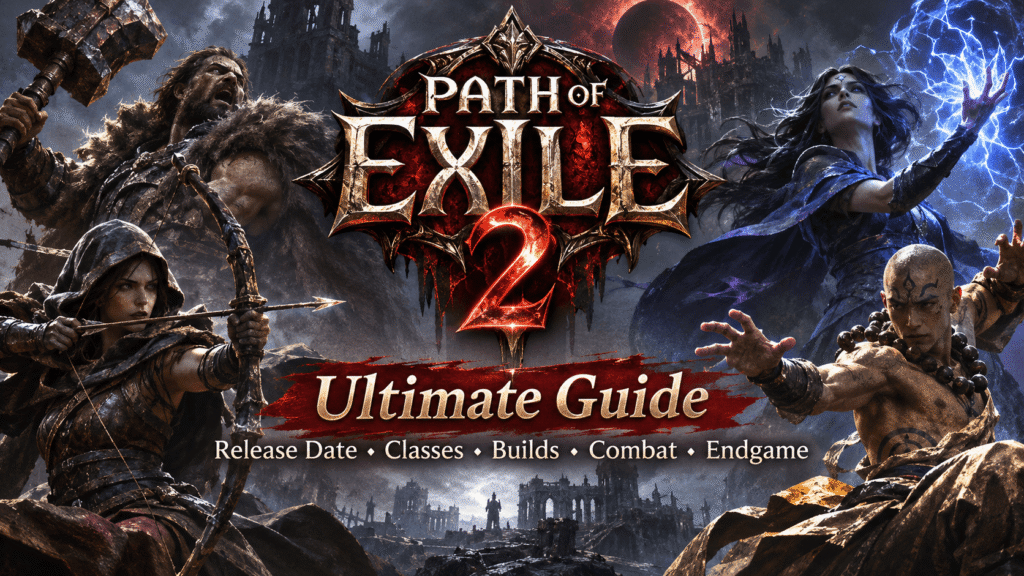
Path of Exile 2 is a dark fantasy action role-playing game (ARPG) developed by Grinding Gear Games. Set in the dangerous continent of Wraeclast, the sequel combines challenging combat, extensive character customization, a skill-gem system, valuable loot, and an evolving endgame.
After entering Early Access on December 6, 2024, Path of Exile 2 is preparing for its full December 11, 2026 release, when the game is scheduled to become free-to-play.
The upcoming Version 1.0 update will complete the six-act campaign, introduce two additional character classes, expand the endgame, and make major changes to character progression.
This guide covers what players should know about Path of Exile 2 before the full launch, including its release schedule, gameplay mechanics, character classes, beginner builds, progression systems, and long-term replayability.
Path of Exile 2 at a Glance
| Feature | Details |
|---|---|
| Game | Path of Exile 2 |
| Developer | Grinding Gear Games |
| Publisher | Grinding Gear Games |
| Genre | Action RPG, Hack and Slash |
| Early Access launch | December 6, 2024 |
| Full release date | December 11, 2026 (PST) |
| Business model | Free-to-play at full release |
| Platforms | PC, PlayStation 5, Xbox Series X/S |
| Multiplayer | Online co-op, up to six players |
| Setting | Wraeclast |
| Full campaign | Six acts |
| Character progression | Classes, Ascendancies, passive skills and skill gems |
What Is Path of Exile 2?
Path of Exile 2 is a standalone sequel to the original Path of Exile, designed around loot-driven combat and flexible character building.
Players create a character, defeat monsters, collect equipment, improve their abilities, and progress through increasingly difficult encounters.
Unlike traditional role-playing games with fixed character development, Path of Exile 2 allows extensive customization through passive skills, equipment modifiers, skill gems, and Ascendancy specializations.
A character’s starting class influences its early strengths, but players can combine skills and equipment to develop unusual builds.
The sequel also introduces a more deliberate approach to combat. Enemy attacks, positioning, movement, and boss mechanics play a larger role in survival.
What makes Path of Exile 2 different?
Path of Exile 2 stands out through several interconnected systems:
- Skill gems: Active abilities can be modified using support gems.
- Passive skill tree: Players invest points to improve damage, defenses, resources, and specialized mechanics.
- Ascendancy classes: Advanced specializations provide additional character-building options.
- Boss encounters: Enemies feature attack patterns that reward observation and timing.
- Loot and crafting: Equipment can be modified to support specific character builds.
- Endgame progression: Players continue developing their characters after finishing the campaign.
These systems give Path of Exile 2 considerable depth, although the number of choices can initially overwhelm new players.
Path of Exile 2 Release Date: When Is the Full Game Coming Out?
Path of Exile 2 is scheduled for full release on December 11, 2026, Pacific Standard Time.
Grinding Gear Games confirmed the date during its November 2026 announcements surrounding ExileCon.
Version 1.0 marks the planned transition out of Early Access and into a free-to-play release.
What’s new in Path of Exile 2 Version 1.0?
The announced update includes:
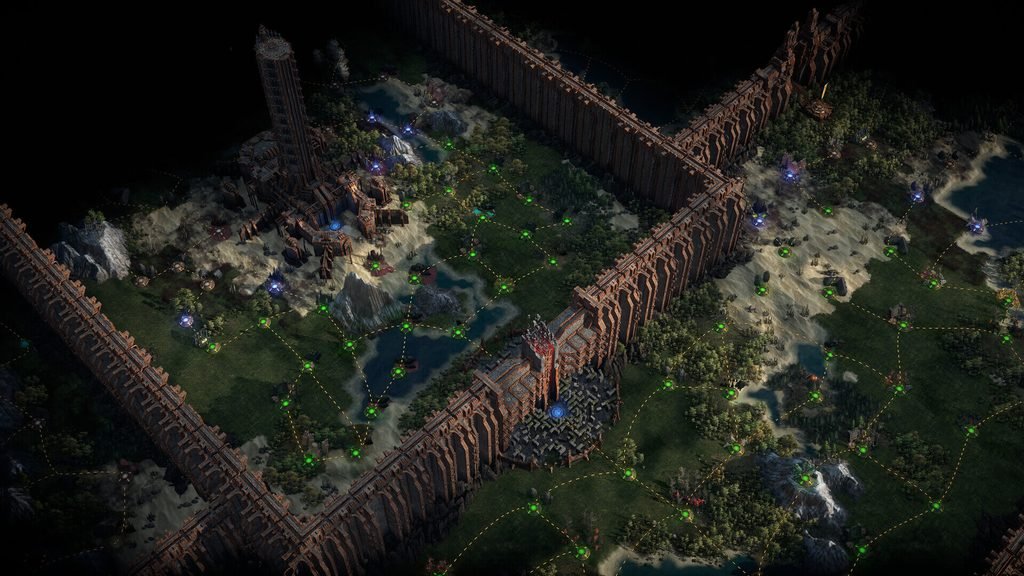
- Acts 5 and 6, completing the main campaign.
- Two additional playable classes: Duelist and Shadow.
- New weapons, skills, and character-building options.
- A new challenge league.
- Significant passive skill tree changes.
- New endgame areas, bosses, and progression systems.
- Additional Unique items and reworked equipment.
The two new campaign acts are expected to introduce 24 areas and 18 unique bosses.
Grinding Gear Games has also announced more than 40 new Unique items and revisions to over 70 existing ones.
These additions make Version 1.0 a substantial content update rather than simply the removal of an Early Access label.
Is Path of Exile 2 free to play?
Path of Exile 2 will become free-to-play when Version 1.0 launches on December 11, 2026.
Before that date, normal Early Access entry requires an eligible access entitlement, commonly obtained through a supporter pack.
Grinding Gear Games has stated that Path of Exile 2 will follow a fair-to-play approach, with optional purchases rather than a system built around purchasing direct competitive power.
Players should distinguish optional cosmetic purchases and convenience features from the game’s core progression systems.
Path of Exile 2 Gameplay: How Does Combat Work?
Path of Exile 2 uses an isometric perspective, allowing players to fight enemies, explore hostile environments, and manage abilities in real time.
Combat combines the familiar action RPG formula with mechanics that emphasize positioning and enemy attack patterns.
Movement and dodging
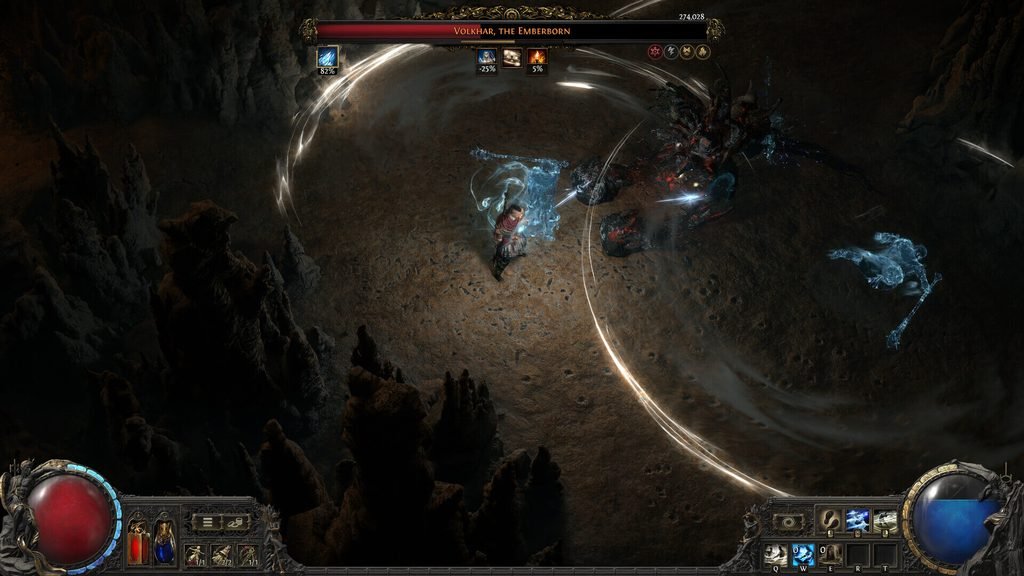
The dodge roll is one of the game’s most recognizable combat mechanics.
Players can use it to reposition during fights and avoid many dangerous attacks.
However, dodging does not replace defensive equipment or careful positioning. Some encounters require players to understand attack timing, area effects, and movement restrictions.
For beginners, learning when to dodge is often more valuable than repeatedly attacking without considering enemy behavior.
Skills and support gems
Path of Exile 2 separates active abilities from the support gems that modify them.
For example, a character might use a projectile skill and equip compatible support gems to change its damage, targeting, or other behavior.
The exact combinations depend on gem restrictions and the current game version.
This system encourages experimentation because two characters using the same main skill can perform differently depending on their supporting abilities.
Boss fights
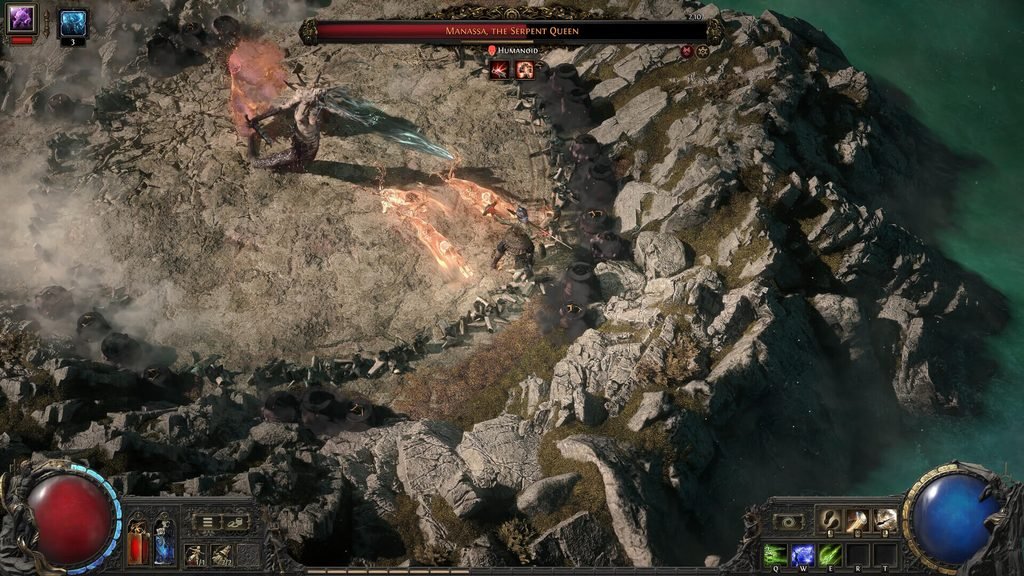
Boss encounters are a major part of Path of Exile 2.
Bosses frequently use recognizable attack patterns, environmental hazards, and different combat phases.
A successful strategy usually involves identifying dangerous attacks, maintaining appropriate distance, and dealing damage during safe openings.
Players who struggle against bosses should review their elemental resistances, life or energy shield, equipment, and movement habits before focusing exclusively on higher damage.
Path of Exile 2 Classes Explained
Path of Exile 2 is designed around twelve base character classes, although the number available depends on the current release version.
As of November 8, 2026, eight base classes are playable in Early Access. Duelist and Shadow are scheduled to arrive with Version 1.0.
The game’s long-term design also includes additional class and Ascendancy options.
Path of Exile 2 class comparison
| Class | Primary playstyle | Beginner suitability |
|---|---|---|
| Warrior | Heavy melee attacks and defense | Moderate |
| Ranger | Ranged bow combat | Good |
| Witch | Minions, curses and chaos magic | Good |
| Sorceress | Elemental spellcasting | Good |
| Mercenary | Crossbows, ammunition and grenades | Good |
| Monk | Fast melee and elemental combinations | Moderate |
| Huntress | Spears, parries and mobile combat | Moderate |
| Druid | Shapeshifting and nature magic | Moderate |
| Duelist | Sword-based melee combat | Available at 1.0 |
| Shadow | Daggers, stealth and traps | Available at 1.0 |
Beginner suitability is an editorial assessment, not an official developer rating. Actual difficulty depends on the build and game balance.
Warrior: Heavy melee combat
The Warrior specializes in strength-based combat, using heavy weapons, powerful strikes, and defensive abilities.
Warrior builds often appeal to players who prefer fighting enemies at close range.
However, slower attack animations can make positioning particularly important.
Ranger: Mobile ranged damage
The Ranger specializes in bow attacks, movement, and Dexterity-based combat.
Ranger builds can use different damage types and status effects to defeat enemies while maintaining distance.
This makes the Ranger a reasonable starting point for players who prefer ranged attacks.
Witch: Minions and dark magic
The Witch focuses on spellcasting, curses, and summoning.
Minion-oriented Witch builds allow summoned creatures to contribute damage and distract enemies.
This can provide a more forgiving introduction to combat, although managing summons and defenses still requires attention.
Sorceress: Elemental spellcasting
The Sorceress specializes in elemental magic, including fire, cold, and lightning.
Sorceress builds can focus on direct spell damage, area control, and combinations of elemental effects.
Players who enjoy traditional spellcaster characters may find this class appealing.
Mercenary: Crossbows and tactical combat
The Mercenary introduces a weapon-focused ranged playstyle built around crossbows, ammunition types, and grenades.
Different ammunition and skill combinations allow players to adapt their attacks to different enemies.
Mercenary gameplay rewards players who enjoy managing combat tools and combining abilities.
Monk: Fast melee combinations
The Monk uses martial arts-inspired attacks and elemental combinations.
Its gameplay often requires close-range positioning and careful sequencing of abilities.
Players who enjoy responsive, combo-oriented combat may prefer the Monk.
Huntress: Spears and precision
The Huntress combines spear attacks, mobility, and defensive techniques such as parrying.
Its combat style can reward precise timing and an understanding of enemy attacks.
Druid: Shapeshifting combat
The Druid combines nature-themed magic with animal transformations.
Different forms provide different combat possibilities, making the class attractive to players who enjoy changing tactics during encounters.
Duelist and Shadow: New Version 1.0 classes
The Duelist and Shadow are scheduled to become playable on December 11, 2026.
The Duelist focuses on sword-based combat and martial techniques.
The Shadow emphasizes daggers, traps, stealth, and ambush-style gameplay.
Both classes are expected to expand the available character-building options when the full game launches.
Best Path of Exile 2 Classes for Beginners
The best starting class in Path of Exile 2 depends on how a player prefers to fight.
For most newcomers, a class with understandable abilities and manageable combat positioning is a sensible choice.
Recommended beginner starting points
Ranger: Best for ranged combat
A Ranger allows players to attack from a distance while learning enemy movement and boss mechanics.
Witch: Best for summoning
A minion-focused Witch can let summoned allies handle part of the combat workload, although the player must still manage survival.
Sorceress: Best for magic
The Sorceress is suitable for players who enjoy elemental spells and ranged damage.
Mercenary: Best for tactical ranged combat
The Mercenary is a strong option for players interested in crossbows, grenades, and weapon-based skill combinations.
There is no permanently best class. Game updates can change skill balance, equipment interactions, and the effectiveness of popular builds.
Path of Exile 2 Builds: How to Create a Strong Character
A successful Path of Exile 2 build combines damage, defenses, equipment, and resource management.
Selecting a class is only the first step.
Players must also decide which active skills to use, how to support those skills, and where to invest passive points.
Step 1: Choose one primary damage strategy
Begin with a clear damage plan.
Examples include elemental spells, bow projectiles, minion damage, or melee attacks.
Trying to invest equally in several unrelated damage systems can make early progression more difficult.
Step 2: Select compatible support gems
Support gems modify active skills.
Choose support gems that improve the primary ability rather than adding modifiers that do not work with the skill’s mechanics.
Check compatibility and current restrictions before investing heavily in a particular setup.
Step 3: Build sufficient defenses
Damage alone is not enough.
A reliable character needs defensive layers such as life, energy shield, armor, evasion, elemental resistances, or other defensive mechanics.
The correct combination depends on the class and build.
Step 4: Improve equipment regularly
Weapons and armor influence character performance.
A damage-focused build may benefit greatly from a weapon upgrade, while a fragile character might need better resistances or defensive equipment.
Evaluate gear based on useful modifiers rather than item rarity alone.
Step 5: Adjust your passive skill tree
Passive points should support the build’s main strategy.
Choose nodes that improve the character’s primary damage mechanics and defenses.
Avoid spreading points across unrelated bonuses without a clear purpose.
Step 6: Test against difficult enemies
Boss fights expose weaknesses that ordinary enemies may not reveal.
If a build performs poorly, identify whether the problem is insufficient damage, inadequate defenses, resource shortages, or ineffective positioning.
A small adjustment can sometimes improve performance more than a complete character rebuild.
Path of Exile 2 Beginner Tips: How to Progress Faster
Path of Exile 2 rewards players who understand its systems instead of simply rushing through the campaign.
1. Prioritize survival early
Maintaining suitable defenses helps prevent repeated deaths.
Review equipment and elemental resistances as enemy difficulty increases.
2. Learn enemy attack patterns
Watch how bosses prepare their attacks.
Recognizing a dangerous animation can create opportunities to dodge or reposition.
3. Keep your main skills updated
Review newly available skill gems and support options.
An outdated setup may struggle even when the character’s level is appropriate.
4. Use crafting materials thoughtfully
Crafting can improve equipment, but not every item deserves a large investment.
Prioritize equipment that solves a clear problem in your build.
5. Understand your damage type
Physical, elemental, chaos, and other damage mechanics interact with different modifiers.
Choose equipment and passive bonuses that match your main skills.
6. Avoid copying outdated builds
Path of Exile 2 receives balance changes.
A build designed for an older patch may no longer perform as expected.
Always check the version associated with a guide.
7. Prepare before difficult bosses
Review your defenses, flask setup, skills, and equipment before repeated attempts.
Understanding why a fight is difficult makes improvement more efficient.
8. Experiment without losing focus
Trying different abilities is part of the game’s appeal.
However, keep a consistent primary damage strategy while learning the progression systems.
Path of Exile 2 Campaign: Story and Exploration
Path of Exile 2 takes place in Wraeclast, a continent threatened by corruption and dangerous supernatural forces.
The story follows the return of a sinister threat that affects the land and its inhabitants.
Players travel through different regions, encounter hostile factions, and fight creatures influenced by corruption.
How many acts are in Path of Exile 2?
The full Path of Exile 2 campaign is designed to contain six acts.
During Early Access, the playable campaign includes four main acts and additional interlude content.
Acts 5 and 6 are scheduled for the December 2026 release.
The complete campaign is intended to provide a more extensive story before players move into the endgame.
Why the campaign matters
The campaign teaches players the mechanics required for later challenges.
Boss encounters introduce attack patterns, equipment becomes more specialized, and character builds develop through additional skill and passive options.
Players who learn these systems during the campaign will generally be better prepared for endgame encounters.
Path of Exile 2 Endgame Explained
The Path of Exile 2 endgame begins after the main campaign and focuses on repeated combat challenges, equipment upgrades, and character progression.
Rather than ending when the story finishes, the game provides systems that allow players to continue developing their characters.
The Atlas and mapping
The Atlas is a central part of Path of Exile 2 endgame progression.
Players explore maps containing different environments, enemies, rewards, and challenges.
Waystones are used to access map content, while progression systems allow players to pursue increasingly demanding encounters.
Endgame bosses
Boss encounters provide difficult challenges for developed characters.
These fights can test damage output, defensive preparation, and understanding of combat mechanics.
Defeating more difficult bosses may require improving equipment and adjusting a character’s build.
Crafting and equipment progression
Endgame equipment can become highly specialized.
Players search for useful modifiers, improve items, and pursue upgrades that strengthen their chosen build.
This equipment progression is one of the main reasons players continue returning to Path of Exile.
What’s changing in Version 1.0?
Grinding Gear Games has announced substantial endgame changes for the full release.
The update is expected to introduce new map content, boss encounters, and revised Atlas progression.
The announced Conquerors of Wraeclast league also introduces new activities involving armies, territory, and castles.
Because these changes have not yet reached their scheduled full release, players should review the final Version 1.0 patch notes before choosing a permanent endgame strategy.
Path of Exile 2 vs Path of Exile 1: What’s Different?
Path of Exile 2 is a separate game rather than a replacement for the original Path of Exile.
Grinding Gear Games plans to continue supporting both titles.
| Feature | Path of Exile 1 | Path of Exile 2 |
|---|---|---|
| Combat | Generally faster-paced established ARPG combat | More deliberate combat with prominent dodge mechanics |
| Campaign | Original Wraeclast storyline | New storyline set later in Wraeclast |
| Skills | Skill gems traditionally linked through equipment sockets | Redesigned skill-gem and support system |
| Character development | Extensive established passive and Ascendancy systems | Redesigned progression and class systems |
| Endgame | Mature Atlas and league content | Developing Atlas and evolving endgame systems |
| Release status | Established live game | Early Access until December 11, 2026 |
| Pricing | Free-to-play | Free-to-play at full release |
Which Path of Exile game should you play?
Choose Path of Exile 1 if you want an established ARPG with years of accumulated content and a mature endgame.
Choose Path of Exile 2 if you prefer more deliberate combat, redesigned character systems, and the opportunity to experience a major new release.
Both games appeal to players who enjoy experimentation, complex equipment systems, and long-term character progression.
▶ Halloween The Game (2026): Gameplay, Price & PC Specs
Is Path of Exile 2 Multiplayer?
Yes. Path of Exile 2 supports online cooperative gameplay for parties of up to six players.
Players can cooperate during combat, tackle encounters, and develop characters with complementary abilities.
For example, a melee character may fight near enemies while a ranged character attacks from a safer position.
However, cooperative play does not eliminate the need for appropriate defenses or understanding of boss mechanics.
Multiplayer can also introduce additional considerations involving loot, progression, and encounter difficulty.
Path of Exile 2 PC Requirements and Performance
Path of Exile 2 is a visually detailed action RPG featuring complex environments, large numbers of enemies, and demanding combat effects.
PC performance depends on hardware, graphics settings, resolution, and the current game version.
Players should check the latest minimum and recommended requirements on the official Steam store page before installing.
How to improve Path of Exile 2 performance
- Install the game on an SSD where possible.
- Update graphics drivers.
- Reduce demanding visual settings if frame rates are unstable.
- Close unnecessary background applications.
- Monitor CPU, GPU, and memory usage.
- Test performance in areas with many enemies and visual effects.
A stable frame rate is particularly useful during difficult boss fights where precise movement and reaction timing matter.
Is Path of Exile 2 Worth Playing in 2026?
Path of Exile 2 is worth considering for players who enjoy demanding action RPG combat, loot collection, and detailed character customization.
Its strongest appeal comes from the interaction between character classes, skill gems, equipment, and challenging encounters.
Players who enjoy experimenting with different builds may find considerable replay value.
However, the game may be less suitable for players who prefer simple progression systems or minimal equipment management.
The learning curve can be steep, and some players may find the number of available choices difficult to manage.
Who should play Path of Exile 2?
Path of Exile 2 is particularly suitable for:
- Fans of action RPGs and loot-driven games.
- Players who enjoy creating character builds.
- Gamers interested in difficult boss encounters.
- Players looking for long-term progression.
- Fans of dark fantasy environments.
- Groups interested in cooperative RPG gameplay.
Players who prefer shorter, more straightforward campaigns may want to consider the time required to understand the game’s progression systems.
Frequently Asked Questions About Path of Exile 2
When does Path of Exile 2 fully release?
Path of Exile 2 is scheduled to fully release on December 11, 2026, Pacific Standard Time. Version 1.0 will complete the six-act campaign and introduce new classes, skills, equipment, and endgame content.
Is Path of Exile 2 free?
Path of Exile 2 is scheduled to become free-to-play with its December 11, 2026 full release. Before that date, standard Early Access entry requires an eligible access entitlement.
Is Path of Exile 2 available on Steam?
Yes. Path of Exile 2 has an official Steam store page and has been available through Early Access since December 2024.
Is Path of Exile 2 on PS5 and Xbox?
Yes. Path of Exile 2 is available in Early Access on PlayStation 5 and Xbox Series X/S, alongside PC.
Can I play Path of Exile 2 solo?
Yes. Path of Exile 2 supports solo play. Players can complete content independently, although difficult encounters may require careful character preparation.
Does Path of Exile 2 have co-op?
Yes. Path of Exile 2 supports online cooperative gameplay with parties of up to six players.
How many classes are in Path of Exile 2?
Path of Exile 2 is designed around twelve base character classes. Eight are playable as of November 8, 2026, with Duelist and Shadow scheduled to arrive in Version 1.0. The remaining classes are part of the longer-term class roster.
What is the best beginner class in Path of Exile 2?
Ranger, Witch, Sorceress, and Mercenary are reasonable beginner choices depending on preferred combat style. The best option depends on the current patch, available skills, and the player’s familiarity with action RPG mechanics.
Is Path of Exile 2 harder than Diablo 4?
Path of Exile 2 generally places greater emphasis on build planning, equipment interactions, and understanding complex progression systems. Diablo 4 may be easier for some newcomers to approach, although difficulty varies with character builds and selected activities.
Does Path of Exile 2 have an endgame?
Yes. Path of Exile 2 features Atlas mapping, difficult bosses, crafting, and equipment progression after the campaign. Version 1.0 is expected to expand and revise these systems.
Is Path of Exile 2 pay-to-win?
Grinding Gear Games describes Path of Exile 2 as fair-to-play and says its games will not be pay-to-win. Optional purchases exist, including cosmetics and convenience-related account features.
Is Path of Exile 2 better than Path of Exile 1?
Neither game is automatically better for every player. Path of Exile 1 offers a mature content ecosystem, while Path of Exile 2 introduces redesigned combat, progression, and character systems.
▶ Game Streaming Tips: Level Up Your Broadcast Game
Final Verdict: Should You Play Path of Exile 2?
Path of Exile 2 offers a demanding action RPG experience built around character experimentation, challenging enemies, and long-term progression.
The planned December 11, 2026 launch represents an important milestone for the game. With a complete six-act campaign, new classes, a revised endgame, and free-to-play access, Version 1.0 is positioned to attract both returning players and newcomers.
For players who enjoy learning complex systems and refining character builds, Path of Exile 2 is a strong game to consider.
New players should begin with a manageable class, focus on one primary damage strategy, invest in defenses, and gradually learn the game’s crafting and progression systems.
The best way to approach Path of Exile 2 is to treat character development as a process of experimentation rather than expecting a perfect build immediately.
Sources and References
- Path of Exile 2 — Official Website
- Path of Exile 2 — Steam Store
- Path of Exile 2 — Official Steam Announcements
- Path of Exile 2 Wiki
Editorial note: Release dates, announced features, and class availability reflect information published through November 8, 2026. Future patches may change balance, progression, and gameplay systems.