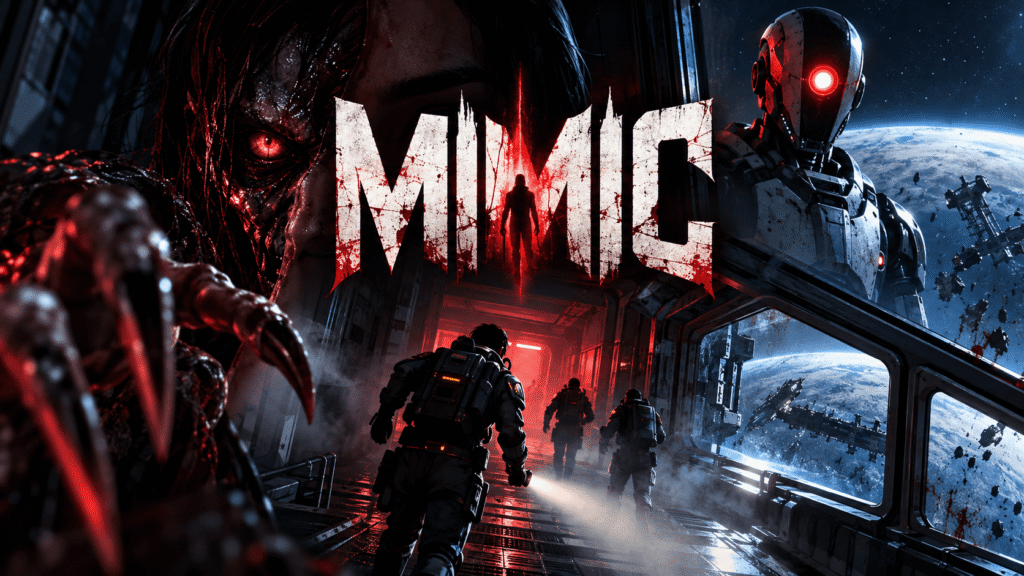
Imagine being trapped aboard a failing spaceship, surrounded by people who claim to be your friends. One of them might be a shape-shifting monster. Another could be secretly working against your team. Meanwhile, a deadly Android patrols the corridors, ready to hunt anyone it considers suspicious.
That is the central premise of Mimic, an asymmetrical multiplayer survival horror game developed and published by Ryan Laley Games.
Released into Steam Early Access on October 26, 2026, Mimic combines social deduction, cooperative objectives, deception, and science-fiction horror for up to 10 players. Unlike conventional horror games built around fighting monsters, Mimic makes trust itself a survival mechanic.
What Is Mimic?
Mimic is a first-person, asymmetrical multiplayer survival horror game in which players must complete objectives, identify hidden enemies, and escape a dangerous spaceship.
Every match features secret roles with competing goals. Some players attempt to repair the ship and survive. Others work to sabotage the mission or eliminate the crew.
The game is set aboard the Icarus, a spacecraft experiencing critical failures. Oxygen is running low, an Android is hunting suspicious individuals, and a biological creature capable of disguising itself as a human is hiding among the crew.
The combination of hidden identities, proximity voice chat, and an environmental threat creates a different kind of multiplayer horror experience: players must judge not only what they see, but also what other players say.
Mimic Game Overview
| Feature | Details |
|---|---|
| Game | Mimic |
| Developer | Ryan Laley Games |
| Publisher | Ryan Laley Games |
| Early Access release | October 26, 2026 |
| Platform | Windows PC via Steam |
| Genre | Survival Horror, Social Deduction, Multiplayer |
| Players | Up to 10 |
| Perspective | First-person |
| Game modes | Online PvP, Online Co-op |
| Engine | Unreal Engine |
| Status | Early Access |
Details are based on the Steam store listing, developer announcements, and SteamDB.
How Does Mimic Gameplay Work?
Mimic gameplay revolves around completing objectives while discovering which players are secretly working against the crew.
The central gameplay loop involves three overlapping threats: environmental hazards, the Android hunting players, and human-controlled enemies capable of deception.
1. Complete objectives and repair the spaceship
Crew members must cooperate to repair the Icarus and create an opportunity to escape.
Players need to explore dangerous areas, interact with ship systems, and complete tasks while monitoring the behavior of their teammates.
Because objectives may separate players across the map, even routine repairs can create opportunities for betrayal.
2. Identify the hidden Mimic
One player may be the Mimic, a biological creature capable of changing its appearance and hiding among human survivors.
The Mimic can build trust, deceive other players, and attack when the opportunity arises.
This creates a social-deduction system in which conversations, suspicious movement, and unexplained disappearances become important clues.
3. Survive the Android
The Android introduces an additional danger that neither side can safely ignore.
Players can direct suspicion toward others, encouraging the Android to pursue suspected Mimics. However, a false accusation can result in an innocent crew member being killed.
The Android therefore becomes both a threat and a tool that players may attempt to manipulate.
4. Communicate using proximity voice chat
Mimic features proximity-based voice communication, meaning nearby players can communicate as they explore.
For survivors, voice chat helps coordinate repairs and warn teammates about danger.
For the Mimic and Agent, communication can become a weapon for spreading false information and creating distrust.
The result is a horror game where a convincing lie can be as dangerous as a monster attack.
All Three Mimic Roles Explained
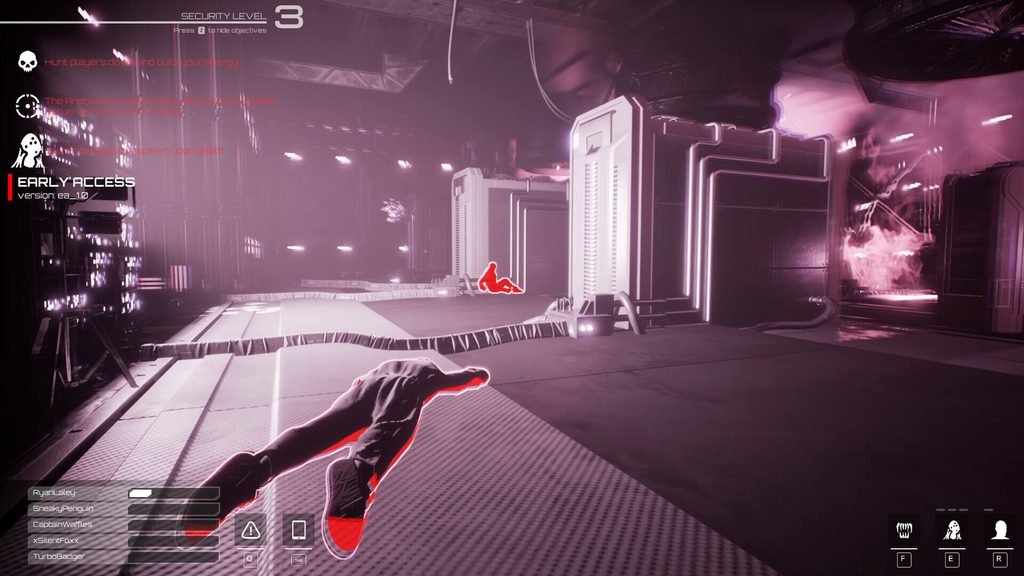
Mimic currently features three core playable roles: Crew, Agent, and Mimic. Each has a different objective and changes how players approach a match.
The Crew — Survive and escape
The Crew represents the human survivors aboard the Icarus.
Their objective is to repair ship systems, complete required tasks, identify threats, and escape.
Crew players benefit from cooperation, but excessive trust can be fatal. They must balance staying together with completing objectives efficiently.
The Agent — Sabotage from within
The Agent is a human character with a secret corporate agenda.
Unlike the Mimic, the Agent is not the shape-shifting monster. However, the Agent’s objectives conflict with the Crew’s survival.
The Agent attempts to sabotage the mission and help the Mimic succeed, making this role particularly dangerous because suspicious behavior does not necessarily reveal an obvious monster.
The Mimic — Deceive, transform, and hunt
The Mimic is the game’s primary biological threat.
It can disguise itself, exploit trust, and attack vulnerable players. The Mimic must decide when to remain hidden and when to reveal its true nature.
Its ability to transform introduces a central uncertainty: a player who appears harmless may become the greatest threat in the room.
| Role | Primary objective | Main approach |
|---|---|---|
| Crew | Repair systems and escape | Cooperation and investigation |
| Agent | Sabotage the mission | Deception and manipulation |
| Mimic | Eliminate or outlast the Crew | Disguise and hunting |
What Makes Mimic Different From Other Multiplayer Horror Games?
Mimic combines several familiar horror mechanics in a distinctive arrangement.
Social deduction with a real monster
Unlike games where hidden enemies only sabotage objectives, Mimic features a biological threat that can actively hunt and kill survivors.
Players must identify deception while managing direct physical danger.
An Android that can be manipulated
The Android creates consequences for accusations.
A survivor who incorrectly identifies a Mimic might unintentionally help the real monster by directing the Android toward an innocent player.
Randomized objectives and match modifiers
Mimic includes randomized objectives and optional gameplay modifiers called Affixes.
These modifiers can change match conditions, including options such as one-hit kills, permanent fire, or invisible Mimics.
Players can customize matches to create different challenges rather than relying on the same experience every round.
Twitch integration
Mimic includes Twitch integration that allows streaming audiences to influence gameplay through voting and interactions involving the Android.
This feature gives content creators opportunities to involve viewers in the chaos rather than having them simply watch.
Halloween The Game (2026): Gameplay, Price & PC Specs
Is Mimic Similar to Among Us, Lethal Company, or The Thing?
Mimic shares individual design ideas with other recognizable social-deduction and horror experiences, but it does not reproduce any one of them.
| Game | Main similarity to Mimic | Important difference |
|---|---|---|
| Among Us | Hidden roles and deception | Mimic emphasizes first-person survival horror |
| Lethal Company | Cooperative tasks and dangerous environments | Mimic adds secret human-controlled adversaries |
| Deceit 2 | Multiplayer deception and monster threats | Mimic centers on spaceship objectives and its Android system |
Players who enjoy questioning their teammates, interpreting suspicious behavior, and surviving unpredictable encounters may find Mimic particularly appealing.
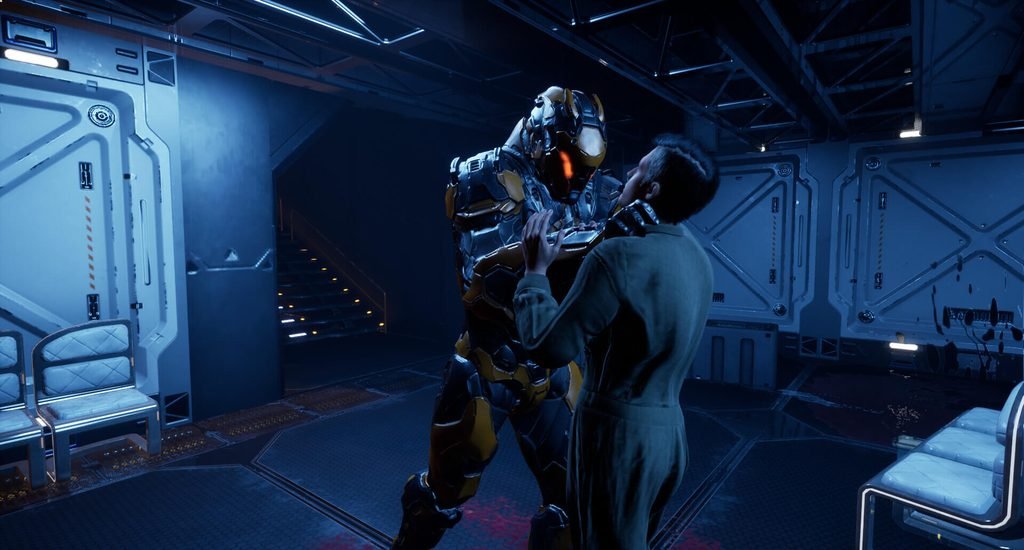
Mimic Early Access: What Is Available in 2026?
Mimic entered Steam Early Access on October 26, 2026. The developer describes the core experience as playable, while acknowledging that balance, features, and technical performance will continue to evolve.
The initial Early Access experience includes online multiplayer, public matchmaking, private lobbies, the three primary roles, the first playable environment, proximity voice chat, progression systems, unlockable rewards, custom game settings, and Twitch integration.
This means players can experience the main gameplay concept without waiting for the final release.
However, Early Access also means players may encounter bugs, balance changes, and unfinished content.
Latest Mimic updates — October 2026
The developer has already released several patches following launch.
- October 26: Mimic officially entered Early Access.
- October 27–28: Patch 1.0.1 addressed objective interactions, collisions, lobby issues, and user-interface problems.
- October 28: Patch 1.02 improved matchmaking status information, room codes, and lobby behavior.
- October 29: Patch 1.0.3 improved closing minigame interfaces and hiding or restoring the player HUD when pausing.
These are documented updates rather than predictions about future development. Steam Community
Mimic Roadmap: What Features Are Coming Next?
Ryan Laley has outlined plans to expand Mimic throughout Early Access.
The announced development roadmap includes three additional maps, a planned single-player experience, more gameplay modifiers, expanded lore, and ongoing performance and matchmaking improvements.
The developer also intends to continue refining role balance, progression, and community features.
The Early Access description estimates approximately 12 months of development before the intended full release, although this is a target rather than a confirmed launch deadline.
The roadmap is promising for players who want more environments and gameplay variety, but planned features should not be treated as available until officially released. Steam Store+1
Mimic PC System Requirements
Mimic is currently listed for Windows PC, with the following hardware requirements published on Steam.
| Component | Minimum | Recommended |
|---|---|---|
| OS | Windows 10 64-bit | Windows 10/11 64-bit |
| CPU | Intel Core i5-6600 or AMD Ryzen 3 3100 / Ryzen 5 2600 | Intel Core i5-8400 or AMD Ryzen 5 3600X |
| RAM | 8 GB | 8 GB |
| GPU | GTX 980 / RX 470 / Intel Arc A750 | GTX 2080 / RX 5700 XT / Intel Arc A770 |
| DirectX | Version 11 | Version 12 |
| Storage | 10 GB | 10 GB |
| Internet | Broadband required | Broadband required |
System requirements are reproduced from the developer’s Steam listing. Actual performance depends on hardware, drivers, resolution, and future game updates. Steam Store
Can Mimic run on a low-end PC?
Mimic requires a dedicated graphics solution comparable to the minimum GPUs listed above, along with 8 GB of RAM.
Players with older PCs should compare their exact processor and graphics card against the official minimum specifications.
Meeting the minimum requirements does not guarantee a particular frame rate, especially during Early Access when optimization may change.
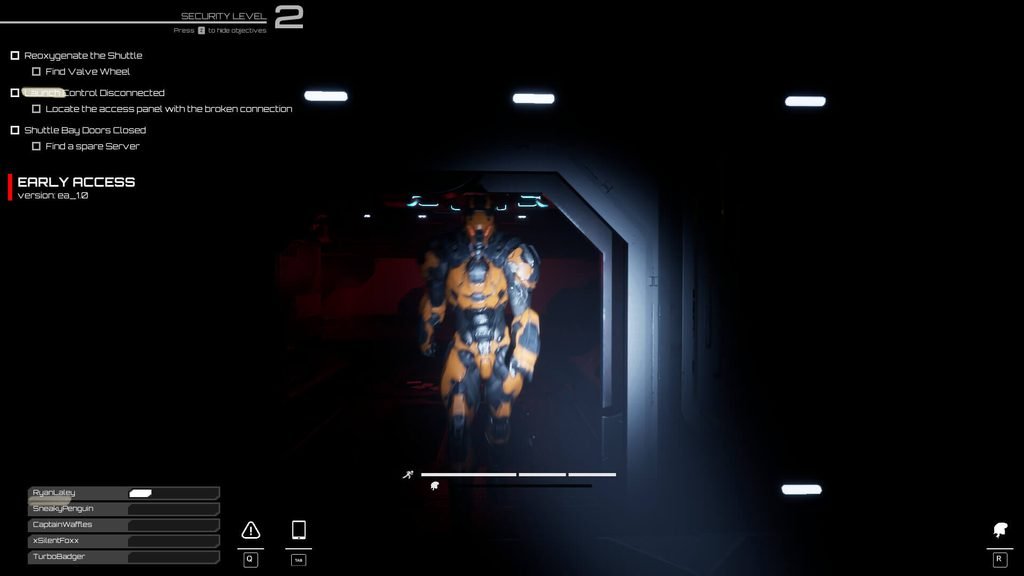
Beginner Tips: How to Survive in Mimic
Because Mimic is built around deception and environmental danger, survival requires more than fast reactions.
Stay aware of your surroundings
Learn the layout of the Icarus and pay attention to escape routes, objective locations, and dangerous areas.
Knowing where to move can help when the Android appears or when another player behaves suspiciously.
Communicate clearly
Use proximity voice chat to coordinate tasks and share observations.
Avoid treating every accusation as proof. A confident player can still be misleading the group.
Watch behavior instead of relying on promises
Observe which players assist with objectives, which repeatedly disappear, and whether their explanations are consistent with what you have seen.
These observations are clues, not guaranteed methods of identifying a hidden role.
Be careful with accusations
Directing the Android toward a suspected Mimic can be useful, but incorrect accusations can eliminate valuable allies.
Use information from multiple players before making a decision.
Experiment with custom matches
Private lobbies and Affixes allow groups to adjust gameplay conditions.
Beginners may benefit from learning the standard objectives before adding difficult modifiers.
Best Video Games to Play in 2026: 6 Top Picks
Is Mimic Worth Playing in 2026?
Mimic is worth considering for players who enjoy multiplayer horror, hidden roles, and tense cooperative gameplay.
Its strongest design idea is the conflict between cooperation and distrust. Crew members need to work together, but the game actively encourages players to question one another.
The additional Android threat distinguishes Mimic from simpler social-deduction games by introducing an unpredictable danger that players can influence but may not fully control.
However, Mimic is still an Early Access release. Players who prioritize polished matchmaking, a large selection of maps, or a complete progression system may prefer to monitor future updates before purchasing.
There is also not yet enough established review evidence to make a confident claim about long-term player satisfaction.
Our assessment based on the documented features: Mimic has an interesting multiplayer horror premise, especially for groups of friends and content creators. Its long-term value will depend on gameplay balance, community activity, technical stability, and the delivery of planned content.
Frequently Asked Questions About Mimic
Is Mimic a multiplayer horror game?
Yes. Mimic is an asymmetrical multiplayer survival horror game combining secret roles, cooperation, deception, and a hostile Android aboard a spaceship.
How many players can play Mimic?
Mimic supports up to 10 players in online multiplayer matches. Players can use public matchmaking or organize private lobbies.
When was Mimic released?
Mimic launched into Steam Early Access on October 26, 2026.
Who developed Mimic?
Mimic was developed and published by Ryan Laley Games.
Is Mimic available on Steam?
Yes. Mimic has an official Steam listing for Windows PC and entered Early Access in October 2026.
Does Mimic have single-player mode?
The developer has announced plans for a single-player experience, but it was not part of the confirmed initial Early Access feature set.
Does Mimic support voice chat?
Yes. Mimic features proximity voice chat, allowing nearby players to communicate, coordinate, or deceive one another.
Is Mimic free to play?
Mimic is described by its developer as a paid Early Access title, with plans to increase the price for the full release. Check Steam for the current regional price.
What is the difference between the Agent and the Mimic?
The Agent is a human saboteur working against the Crew, while the Mimic is a shape-shifting biological monster that can disguise itself and hunt survivors.
Can you fight the monster in Mimic?
Mimic emphasizes evasion, deception, environmental awareness, and manipulation of the Android rather than conventional weapon-based combat.
Final Verdict: Should You Try Mimic?
Mimic introduces a compelling combination of survival horror, social deduction, and asymmetric multiplayer gameplay.
Its central appeal comes from uncertainty. Players must complete objectives while constantly questioning the intentions of those around them. The addition of a dangerous Android makes every accusation potentially consequential.
For horror fans who enjoy playing with friends, communicating under pressure, and uncovering hidden enemies, Mimic offers a concept worth exploring.
For players who prefer finished games with extensive content and established performance, waiting for additional Early Access updates may be the better choice.
Ultimately, Mimic’s success will depend on how effectively its developer expands the experience while preserving the tension that makes its core concept interesting.
Will you trust your crew, or will the Mimic deceive you first?
Sources and References
- Mimic — Official Steam Store Page
- Mimic — Official Updates and Patch Notes
- Mimic — SteamDB Game Information